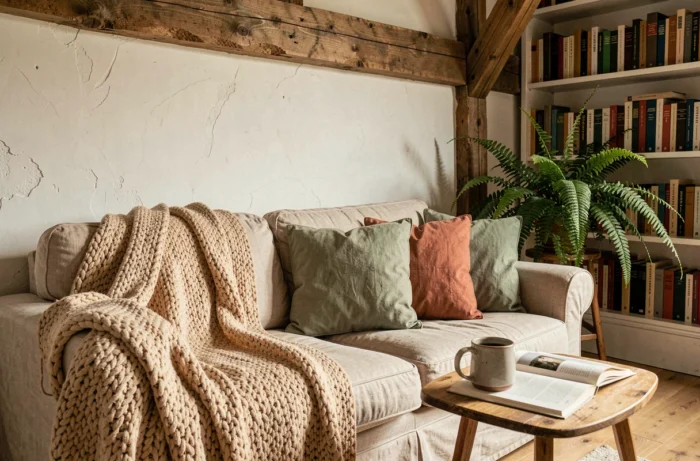
The search for a cozy home goes far beyond a catalog of throws and scented candles. In recent years, trends in interior decoration have shifted towards a broader goal: transforming the home into a space that supports daily well-being, not just aesthetics. This topic deserves to be approached from the perspective of concrete choices that truly alter the ambiance of a room, beyond shopping lists for decor.
Slow decor and organic minimalism: what’s changing in the approach to a cozy interior
Classic content about cozy homes revolves around a reflex: accumulating soft materials, multiplying cushions, adding objects. The recent trend goes in the opposite direction. Organic minimalism, often associated with the japandi movement, combines simplicity and natural materials to create an enveloping atmosphere without visual overload.
Slow decor extends this logic. It involves reducing the number of objects in each room, prioritizing elements chosen for their meaning or actual use, and integrating corners dedicated to reading or meditation. Several specialized sources describe this evolution as a strong trend since 2022, with no signs of decline.
In concrete terms, this means that a living room with a linen sofa, a raw wood coffee table, and a single well-placed light fixture can appear more welcoming than a space overloaded with decor. Fewer objects but more meaning in each choice significantly alters the perception of a room. Ideas and resources on this topic are regularly shared on the Pendant ce Temps website, which explores different ways to inhabit your interior.
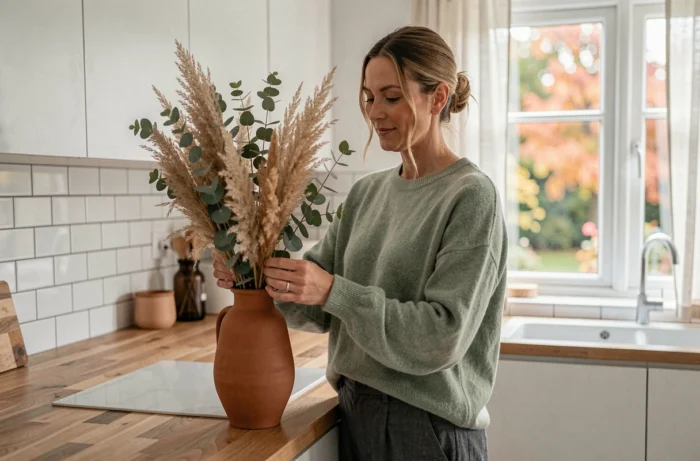
Light and perceived temperature: two often underestimated technical levers
Light is the primary factor that determines whether a room feels cold or warm. Low color temperature bulbs (around 2,700 kelvins) produce a yellow-orange hue reminiscent of natural light at the end of the day. In contrast, bulbs above 4,000 kelvins lean towards bluish white and give a clinical impression, even in a well-decorated space.
Varying light sources within the same room radically changes the ambiance. A single ceiling light, even if soft, flattens the volumes. Combining a reading lamp, an indirect floor lamp, and a few low light points creates areas of shadow and light that make a living room or bedroom feel more intimate.
The issue of thermal comfort in the perception of welcome
French regulations have evolved in recent years regarding energy performance diagnostics, particularly with the reliability of the summer comfort indicator. This evolution highlights a point often overlooked in decoration articles: perceived temperature influences the feeling of warmth as much as wall color.
A poorly insulated home where drafts are felt will never seem warm, even if covered in textiles. Conversely, a properly insulated room with a stable temperature around the recommended setting offers comfort that doesn’t require decorative compensations. Feedback from the field varies on this point between owners and tenants, the latter having less leeway to intervene on the building’s envelope.
Natural materials and colors: balancing wood, textiles, and color palette
Wood remains the most cited material for warming up an interior, and for good reason. Its texture, variations in shade, and ability to age without losing appeal make it a sustainable choice. Field feedback shows some useful trade-offs:
- Light oak and dark walnut do not produce the same effect. Light wood visually enlarges the space while remaining warm, whereas dark wood creates a more subdued atmosphere, suitable for large rooms or bedrooms.
- Mixing wood with stone, linen, or wool creates a contrast of textures that enhances the feeling of welcome. A mono-material interior often appears more monotonous than warm.
- Finishes matter as much as the material. A shiny varnished wood piece gives a colder impression than an oiled or raw wood piece, even if it’s the same species.
On the color palette, earth tones (terracotta, ochre, rosy beige) dominate recent trends in interior decoration. They work well with natural light and retain their warmth under artificial lighting, unlike light grays that easily turn cold in the evening.
Curtains, textiles, and acoustics: the invisible comfort of a welcoming room
Curtains are often treated as a mere aesthetic accessory. Their role goes further. Thick fabric curtains (heavy linen, velvet, lined cotton) absorb some sounds and reduce reverberation in a room. A space that resonates less immediately feels more intimate and welcoming.
This principle applies to all textiles present in a living room or bedroom. A dense rug on a hard floor, cushions made of natural materials on a sofa, a blanket draped over an armchair: each textile element acts as an acoustic absorber in addition to its visual and tactile role.
Choosing textiles based on the actual use of the room
In a shared living space (open-plan living room-kitchen, for example), textiles must withstand daily use. Natural fibers like linen or washed cotton hold up better to repeated washing than synthetic materials, which tend to pill and lose their appearance after a few months.
For a bedroom, where contact with the skin is more direct, the priority is on touch. A pillowcase made of washed linen or cotton percale changes the perception of comfort from the first contact. The choice of bedding textiles influences sleep quality as much as decoration.
- Living room: prioritize removable and washable cushion covers, in colors that don’t show stains at first glance.
- Bedroom: focus on the quality of bed linen rather than the quantity of decorative cushions.
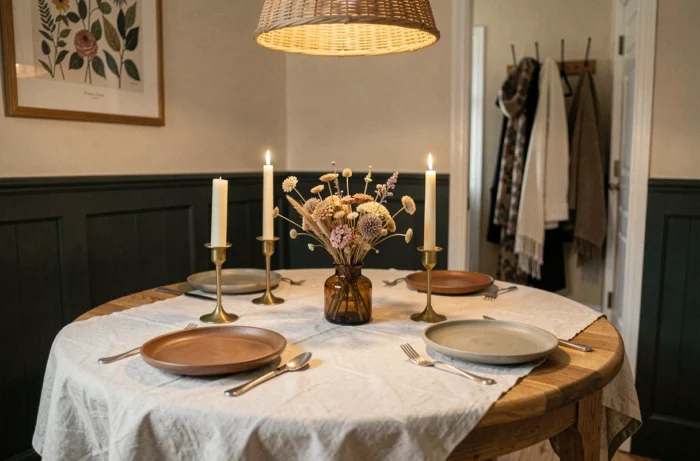
- Entryway: a thick doormat and a wooden coat rack are enough to give a welcoming first impression without cluttering the space.
A cozy home is not one that accumulates the most decorative elements. It is one where every choice of material, light, and arrangement responds to a concrete use. A well-chosen curtain, a bulb with the right color temperature, a raw wood piece that ages with the family: these details create an atmosphere that decor catalogs cannot deliver turnkey.