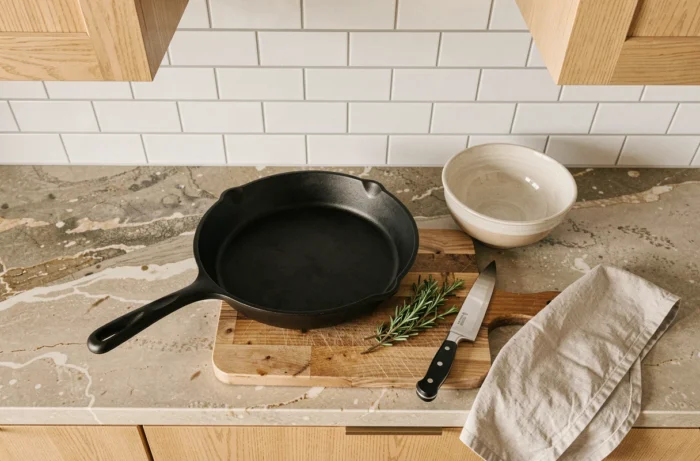
Between the non-stick coatings questioned by European regulations on PFAS and the rise of multifunction steam appliances, kitchen equipment is no longer just a list of pots and knives. What criteria truly separate a durable utensil from one that needs to be replaced within the year, and how are the new regulatory constraints changing the game for demanding home cooks?
Non-stick coatings and PFAS regulations: what changes for your cooking utensils
Most kitchen equipment guides overlook a topic that weighs heavily on the choice of pans, pots, and molds: the increasing restriction of PFAS in the European Union. PFAS, per- and polyfluoroalkyl substances, are found in many traditional non-stick coatings.
The ECHA is currently working on a broad proposal to restrict PFAS at the European level. The European regulation on packaging and packaging waste already applies PFAS limits to food contact packaging, which extends beyond just pans to include baking papers, disposable molds, and certain food films.
For a cook investing in durable cooking equipment, the choice of coating becomes a key selection criterion. Among the solutions offered in all of Mademoiselle Caramel’s equipment, there is a trend towards materials less exposed to these restrictions: stainless steel, cast iron, PFAS-free ceramics.
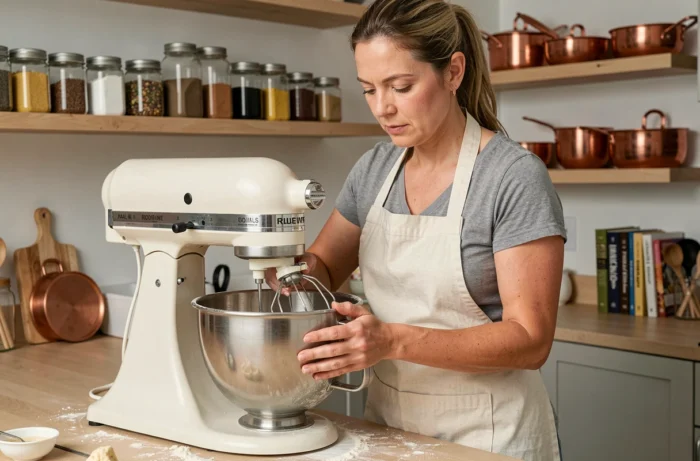
| Type of coating | Contains PFAS | Estimated durability | High temperature compatibility |
|---|---|---|---|
| Classic Teflon (PTFE) | Yes | Medium (frequent replacement) | Limited beyond 260 °C |
| Sol-gel ceramic | No | Medium | Good |
| Bare stainless steel (uncoated) | No | Very long | Excellent |
| Raw or enameled cast iron | No | Very long | Excellent |
Stainless steel and cast iron are not affected by PFAS restrictions, making them investments shielded from regulatory obsolescence. Sol-gel ceramic offers a non-stick compromise, but its longevity remains inferior to that of cast iron.
Kitchen knives: three blades are enough to cover most tasks
Knife sets sold in packs of eight or ten pieces give the illusion of a complete setup. In practice, three well-chosen knives cover almost all cutting tasks in everyday and creative cooking.
- A paring knife (short blade, about 8-10 cm) for precision tasks: peeling, turning, slicing small vegetables or fruits
- A chef’s knife (wide blade, about 20 cm) for chopping, dicing, slicing large volumes, crushing garlic with the flat of the blade
- A bread knife (long serrated blade) for slicing hard crusts without crushing the crumb, but also for cutting certain thick-skinned fruits like pineapple
Investing in quality steel blades rather than a complete block changes the lifespan and comfort of use. A well-cutting knife reduces the risk of injury, because accidents happen when forcing a dull blade.
Maintenance is as important as the purchase. A honing steel, used regularly, maintains the edge of the blade between professional sharpenings. Without this maintenance, even a high-end knife loses its sharpness within weeks of intensive use.
Steam cooking equipment and multifunction appliances: the versatility gap
The new products presented at IFA 2026 confirm an underlying trend: multifunction appliances that include a steam mode are gaining ground against specialized equipment. Steam cooking preserves the textures and nutrients of food better than most other cooking methods.
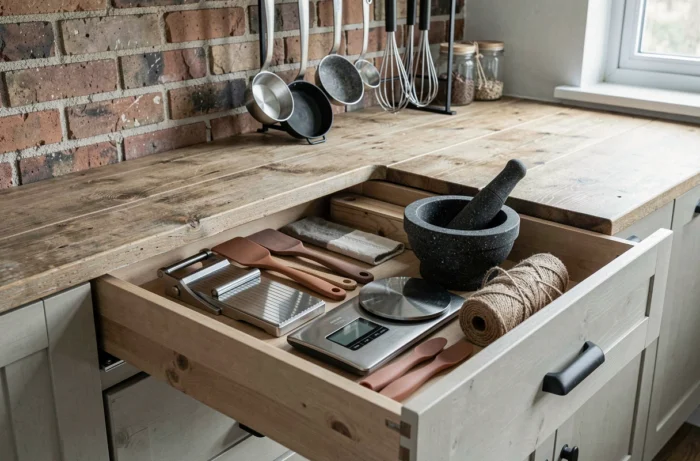
However, a dedicated steamer offers a capacity and heating consistency that a multifunction appliance does not always replicate. The choice depends on the preparation volume and frequency of use.
| Criterion | Multifunction appliance with steam | Dedicated steamer |
|---|---|---|
| Versatility | High (cooking, blending, sautéing, steaming) | Low (steam only) |
| Steam capacity | Limited (one basket, limited volume) | Large (multiple tiers, simultaneous cooking) |
| Footprint | One appliance on the countertop | One additional appliance to store |
| Steam temperature accuracy | Variable depending on models | Generally more stable |
For a gourmet kitchen where steam is used occasionally (side vegetables, fish), a multifunction appliance is sufficient. For regular recipes requiring multiple baskets simultaneously, a dedicated steamer remains more suitable.
Creative pastry: the utensils that make a difference
Pastry requires a precision that savory cooking more easily forgives. A scale accurate to the gram is the first investment to make, even before molds or piping bags. Pastry recipes rely on strict ratios between flour, sugar, fat, and liquid.
The choice of molds follows the same logic as that of pans: PFAS-free silicone molds and ceramic-coated steel molds offer proper release without regulatory compliance issues. Traditional tin molds, common in professional pastry, require systematic greasing but last for decades.
For chocolate work, a reliable kitchen thermometer allows for mastering tempering curves. Without precise temperature control, chocolate can bloom or lose its crunch. The probe thermometer replaces the dipped finger in the pot to check the consistency of caramel or custard.
A balloon whisk, a flexible spatula, and a stainless steel mixing bowl complete the basic trio. These three utensils allow for whipping egg whites, mixing delicate batters without breaking them, and creating a stable water bath.
The equipment of a gourmet kitchen is not measured by the number of accessories stored in drawers. European restrictions on PFAS now guide material choices towards stainless steel, cast iron, and ceramics. Three good knives, a cooking appliance suited to actual use, and a few precise pastry utensils form a stronger foundation than a catalog of specialized gadgets.