
Applying an ice cube to the neck is presented on social media as a health gesture with multiple benefits: pain relief, stress reduction, and a glow for the skin. This practice circulates in the form of short videos, often without distinction between occasional use and a daily routine. The actual physiological mechanisms of cold on this area of the body deserve more careful examination than the usual promises.
Local vasoconstriction on the neck: what cold really triggers
When an ice cube comes into contact with the skin of the neck, the first measurable phenomenon is vasoconstriction of the superficial vessels. The capillaries constrict due to the cold, which temporarily reduces blood flow in the area. This reaction is identical to that observed when applying cold compresses in a medical setting.
This vasoconstriction can transiently decrease swelling or a sensation of pain. Specialized content in rehabilitation and traumatology reminds us that this effect is particularly relevant in the context of acute injury or recent inflammation. It is not a mechanism for general well-being.
The neck contains several sensitive structures: carotid arteries, cervical nerves, thyroid. An article detailing the impact of ice cubes on health reminds us that the vascular response varies according to the condition of the skin, the duration of application, and the temperature of the ice cube itself.
After a few minutes, the body triggers a reflex vasodilation to protect the tissues from prolonged cold. This rebound mechanism returns blood flow to its initial level, or even beyond. The actual effectiveness window of the ice cube on the neck is therefore short, on the order of a few minutes.
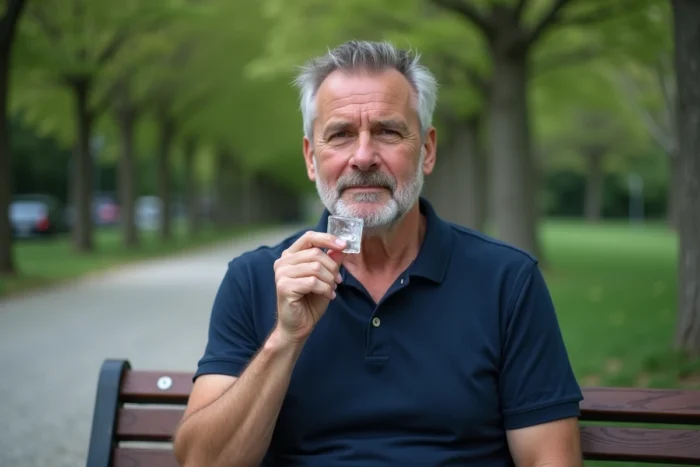
Neck skin and direct cold: a lower tolerance than one might think
The skin of the neck is thinner and more reactive than that of the face. It is already subjected to daily aggressions: friction from collars, sweating, sun exposure in an area rarely protected by sunscreen.
Dermatologists commenting on the trend of “skin icing” emphasize one point: the cosmetic effects of cold on the skin are temporary. The visible tightening of pores or slight reduction in redness disappears in less than an hour. No structural modification of the skin is documented.
The main risk of direct and repeated application concerns already sensitive, dry, or itchy skin. Intense cold can cause:
- Contact irritation, with persistent redness and discomfort, especially if the ice cube is applied without an intermediate cloth
- Worsening of skin dryness, as cold alters the surface lipid barrier
- Superficial frostbite (frostnip) in case of prolonged application beyond a few minutes
Dermatological prevention sources remind us that heat, sweating, friction, and tight clothing already worsen skin irritation of the neck. Adding a thermal shock from the cold may be poorly tolerated in people with reactive skin.
Cervical pain and ice cube: distinguishing acute from chronic
The idea of applying an ice cube to a painful neck is based on a shortcut. Recommendations in rheumatology and physiotherapy distinguish two very different situations.
In the case of acute pain (recent torticollis, mild whiplash, post-effort inflammation), cold applied in the first hours can reduce swelling and calm pain. This is the classic principle of the management protocol for mild trauma. In this specific context, a cold compress wrapped in a cloth is preferable to a bare ice cube, which cools too locally and too intensely.
In the case of chronic pain (cervical tension related to posture, cervical osteoarthritis), cold is generally not the first recommended option. Heat, which promotes muscle relaxation and blood flow, is often better suited. The ice cube on a chronically tense neck may even worsen the contraction by triggering a muscle tightening reflex.
The available data do not allow for a conclusion regarding the benefit of the ice cube on the neck as a daily pain relief gesture. Field reports vary on this point, and no specific clinical study on this practice is cited in the accessible sources.
Ice cube on the neck and vagal stimulation: between physiology and overinterpretation
Some online content associates the ice cube on the neck with stimulation of the vagus nerve, presented as a way to reduce stress or slow the heart rate. The vagus nerve does indeed pass through the neck, and its role in parasympathetic regulation is documented.
The nuance lies in the intensity of the stimulus. An ice cube placed for a few seconds on the skin of the neck does not produce the same type of stimulation as immersing the face in cold water (the diving reflex, studied in physiology, involves contact with the face and not the neck). Extrapolating the effects of immersion in cold water to a simple ice cube on the neck constitutes a shortcut that the most credible sources do not validate.

The feeling of calm experienced after application may be explained by the surprise of the cold, which momentarily distracts attention, or by a placebo effect. These mechanisms are real, but they do not constitute a measurable therapeutic action on the autonomic nervous system.
What the ice cube on the neck can and cannot do
The ice cube applied to the neck produces real but limited physiological effects in time and scope. Local vasoconstriction lasts a few minutes. Relief from acute pain is possible provided a cloth is interposed and the reasonable duration of application is not exceeded.
The cosmetic benefits are temporary and do not modify the structure of the skin. Vagal stimulation through this means remains a hypothesis not supported by available data. For chronic cervical pain, direct cold may prove counterproductive.
Before incorporating this gesture into a routine, checking the condition of one’s skin and the nature of any pain remains the most useful precaution. A sensitive, dry, or already irritated neck has nothing to gain from a daily thermal shock.