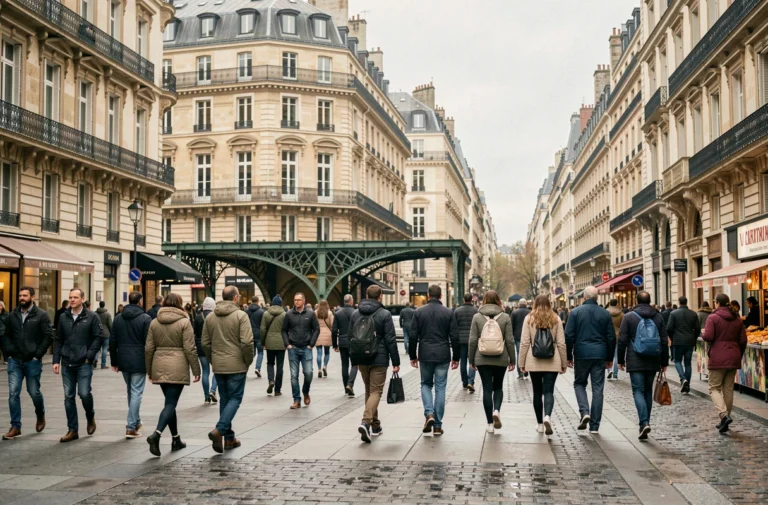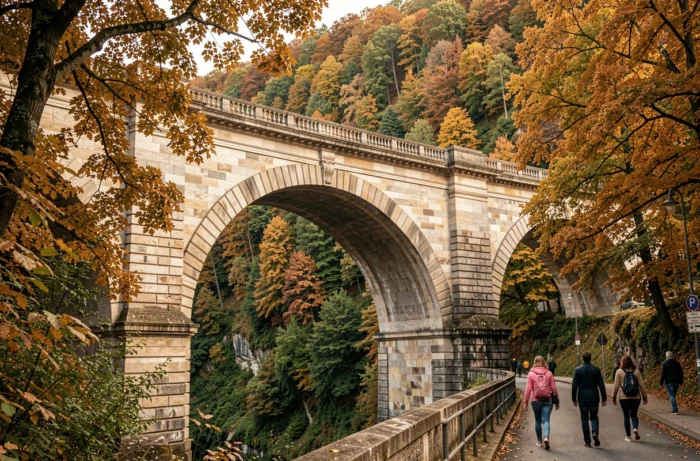
Luxembourg concentrates a density of built heritage and natural reliefs on a small territory that few European destinations can claim at this scale. We recommend approaching this country not through its tourist rankings, but through its geological layers, its soft mobility routes, and its micro-regions often overlooked by general guides.
Vëlosummer and soft mobility: discovering Luxembourg by bike
Vëlosummer now structures Luxembourg’s summer tourism. This national initiative temporarily reserves over 500 km of roads and bike paths for soft traffic, with 14 routes spread across the entire territory. The 2025 edition attracted more than 43,000 participants.
The program is not limited to a simple road closure. A “Vëlosummer Challenge” encourages cyclists to complete all the circuits via the VisitLuxembourg app, prompting them to traverse less frequented areas, from Éislek to the Moselle. To plan a stay centered around these routes, a useful resource is: https://travelguide.lu/, which lists accommodation options and regional paths.
We observe that this cycling approach allows access to villages and viewpoints that are not as well served by car, particularly in the canton of Clervaux where the closed roads traverse dense Ardennes forests.
Mullerthal Trail: geology and technical hiking
The Mullerthal is often reduced to the label “Little Luxembourgish Switzerland,” which obscures the geological reality of the site. The sandstone formations of Luxembourg, sculpted by erosion, create narrow gorges, rocky overhangs, and waterfalls accessible only on foot.
The main trail of the Mullerthal Trail extends over three marked sections of varying difficulty. The B2 section, which passes by the Mullerthal waterfall and the rock formations of Berdorf, is the most technical with sections of wet slabs and stairs carved into the rock.
This route requires high hiking shoes and particular caution after rain. The lesser-known gorges of Hallerbach offer an alternative path where foot traffic remains low even in high season.
Vianden Castle and Luxembourg’s fortified heritage
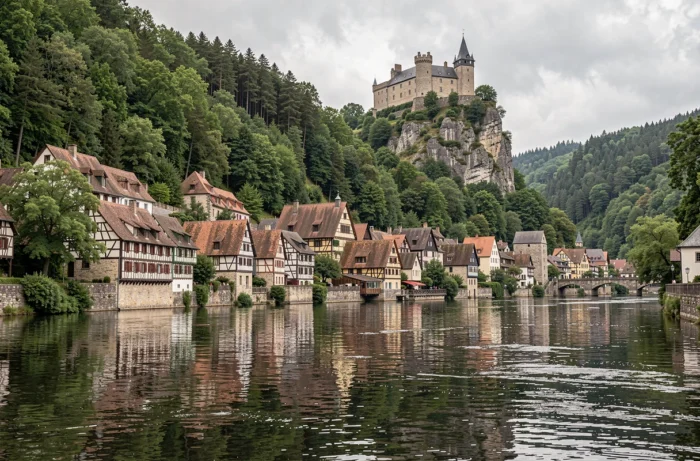
Vianden Castle overlooks the Our Valley from a ridge that offers a panorama of the medieval town below. It is one of the largest fortified castles in Western Europe dating back to the Romanesque and Gothic periods.
However, we recommend not limiting the visit to just Vianden. Luxembourg’s fortified heritage forms a coherent network that tells the defensive history of the country:
- The Beaufort Castle combines a medieval ruin and a Renaissance castle, both of which can be visited separately, with a route that traces construction techniques over several centuries
- The ruins of Brandenbourg, visible from the Grand Tour road, illustrate military architecture from the 12th-13th centuries on a natural rocky spur
- Bourscheid Castle, perched above the Sûre, remains one of the largest in the country and offers nighttime lighting that transforms the evening visit
Each of these sites is located within an hour’s drive of the others, allowing for a two-day castle circuit combined with the surrounding villages.
Éislek and northern Luxembourg: preserved nature and inclusive tourism
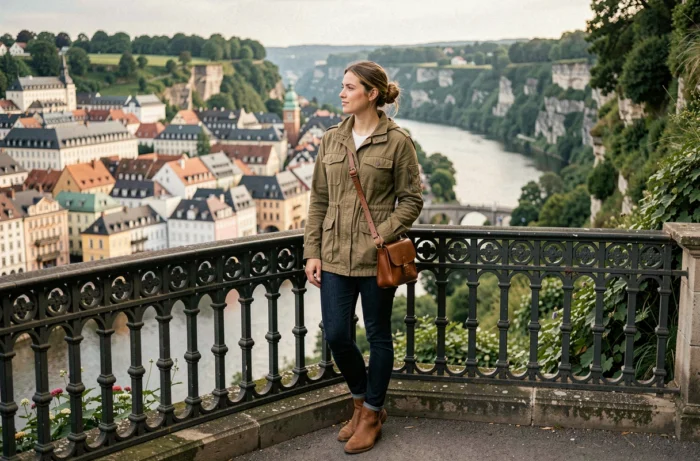
Éislek corresponds to the Luxembourgish Ardennes, a region of wooded plateaus and narrow valleys that concentrates the country’s wildest landscapes. The Our Nature Park structures a growing offer of hiking and wildlife observation each year.
The village of Esch-sur-Sûre deserves special mention. Nestled in a meander of the Sûre River and dominated by the remains of a castle, it serves as an entry point to the Haute-Sûre Lake, the main drinking water reservoir in the country and a supervised recreational area.
Luxembourg is also developing hiking trails accessible to people with reduced mobility. Five inclusive routes already exist (Bissen, Remich, Echternach, Grevenmacher, Redingen/Attert), designed in collaboration with regional offices and municipalities. Two new paths are planned on the Moselle in the short term, and another is announced for 2027 in Monnerich. This “inclusive nature” angle distinguishes Luxembourg from most European hiking destinations.
Clervaux: art, history, and abbey in one area
Clervaux gathers within a radius of a few hundred meters three sites that alone justify a detour to the north. The castle houses the permanent exhibition “The Family of Man” by Edward Steichen, a photographic collection listed in UNESCO’s Memory of the World register.
The Saint-Maurice-de-Clervaux Abbey, still active, overlooks the town from a wooded hill. The Benedictine community maintains artisanal production and welcomes visitors in a setting of silence that contrasts with the bustle of the town center.
The National Museum of Military History in Diekirch, accessible in less than thirty minutes, completes this historical immersion with a documented focus on the Battle of the Bulge and its consequences for the northern part of the country.
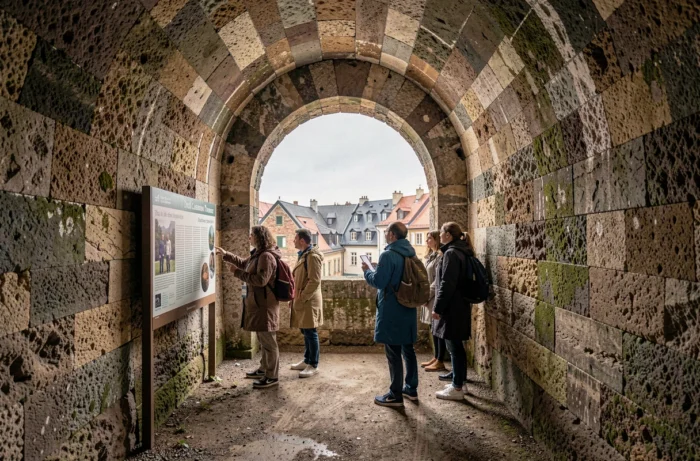
Luxembourg is best explored by combining several modes of transport. A stay of four to five days allows you to cover the Ardennes by bike via Vëlosummer, hike in Mullerthal, and tour the castles by car, without ever spending more than an hour on the road between two stops. This compactness is what truly makes the country a strong destination.