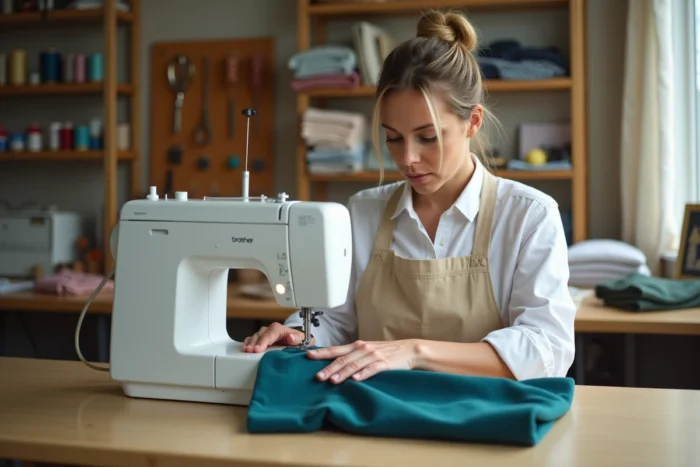
The Brother Innov-is 15 is among the most mentioned electronic sewing machines in discussions among beginner and intermediate sewers. What do user reviews reveal about this Brother model, especially compared to the more recent series in the range? Feedback collected from specialized forums and crash tests highlights clear trends.
Brother Innov-is 15 vs. the Innov-is range: a table of model differences
Sewers comparing the Brother Innov-is 15 to other references in the range note minimal differences in basic functions, but significant differences in user comfort as you move up the range.
| Model | Sewing Stitches | Automatic Buttonhole | Main Difference vs. Innov-is 15 |
|---|---|---|---|
| Innov-is 10 | Identical to 15 | Yes | Only the exterior design changes |
| Innov-is 15 | Basic + decorative stitches | Yes | – |
| Innov-is 20 | Some additional decorative stitches | Yes | Added stitches rarely used in practice |
| Innov-is 30 | Wider stitches + alphabet | Yes | Lettering and fancy stitches |
| Innov-is A16 | Revised stitches, more intuitive selection | Yes | Modernized ergonomics, better handling of thick fabrics |
One point frequently mentioned in several discussions is: the 15 is strictly identical to the 10, only the look changes. Some users have even purchased the discounted 10, sometimes found for around 289 euros from online retailers, while the 15 was sold for about 314 euros. The price difference does not correspond to any technical difference.
For sewers hesitating to move up to the 20, feedback is consistent: the few additional decorative stitches are deemed unnecessary for everyday use. In contrast, the 30 offers alphabet lettering, a tangible advantage for sewing labels or personalizing linens.
By compiling user reviews on the Brother Innov-is 15, this recurring observation emerges: the quality-price ratio remains favorable as long as one does not pay the new price for a model at the end of its commercial life.
Reliability and daily sewing: what users say after several months
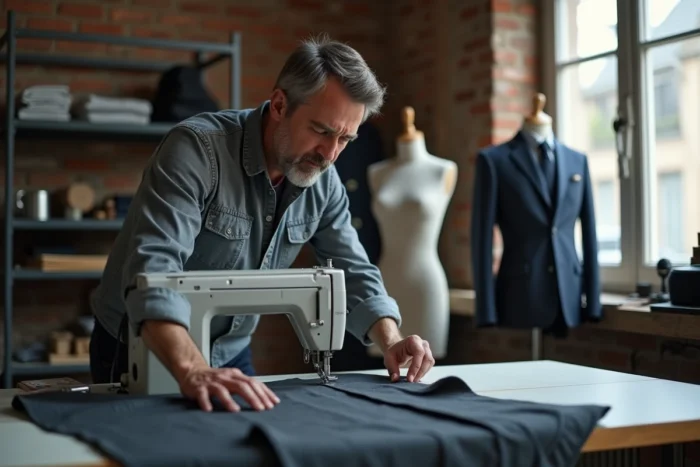
Feedback after extended use paints a consistent profile. The Brother Innov-is 15 sewing machine satisfies in common operations: straight stitches, zigzag, hems, zipper placements.
The automatic buttonhole is mentioned as a real time-saver, even by beginners who dreaded this step. One user on the Thread&Needles forum mentions having made a buttonhole on a coat without difficulty, where her previous entry-level Singer had failed on the same operation.
- The fabric feed is consistent on common materials (cotton, poplin, linen), without shifting or thread jams
- On thick fabrics (denim, oilcloth), the machine shows its limits: the needle penetration lacks power and the feed slips
- The noise level remains moderate, lower than most mechanical machines in the same price range
Thick fabrics remain the recurring weak point in the reviews. For upholstery work or sewing multiple layers of denim, the Innov-is 15 quickly reaches its mechanical limits. Sewers who regularly work with these materials tend to turn to semi-professional machines or robust mechanical models.
Innov-is 15 second-hand: a relevant choice or a trap to avoid
Since generalist French retailers have removed the Innov-is 15 from their catalogs in favor of the A series (A16, A65), the second-hand market has become the main purchasing channel for this model. This shift alters the analysis framework.
Buying a second-hand Innov-is 15 requires checking several elements that are not visible in photos:
- The condition of the rotary hook and bobbin: a scratched hook causes recurring thread jams
- The proper functioning of the feed (worn feed dogs = fabric that does not advance correctly)
- The presence of original accessories (presser feet, screwdriver, needles), whose individual replacement represents a significant additional cost
- The number of hours of use, rarely indicated but estimable by the wear of the pedal and work surface
However, a well-inspected second-hand Innov-is 15 remains a coherent choice for starting sewing without investing in new equipment. Brother’s after-sales service still covers spare parts for this model, which limits the risk of total obsolescence.
Should you prefer a new A16 over a second-hand Innov-is 15?
Recent crash tests on the Brother Innov-is A16 highlight a revised ergonomics: more intuitive stitch selection, better handling of thick fabrics. For a slightly higher budget, the A16 offers a level of comfort that the 15 does not provide.
If the budget is the main constraint, the second-hand Innov-is 15 fulfills its role for simple projects (light clothing, accessories, alterations). As soon as sewing involves technical or thick materials, the A16 justifies the price difference with its more powerful motorization.
Brother Innov-is 15: for which type of sewer
Reviews converge on one point: the Innov-is 15 is neither a professional machine nor a toy. It occupies a specific niche.
The sewers who get the most out of it are those who sew projects in cotton, fine jersey, or poplin, for a few hours a week. For an intensive sewing workshop or upholstery fabrics, the machine shows its mechanical limits too quickly.
The most rational choice today depends on the purchasing channel. In second-hand at a controlled price, the Innov-is 15 remains a reliable and sufficient machine for learning. When buying new, it is better to direct the budget towards the A range, which is newer and better suited to the expectations of both beginners and regular sewers.