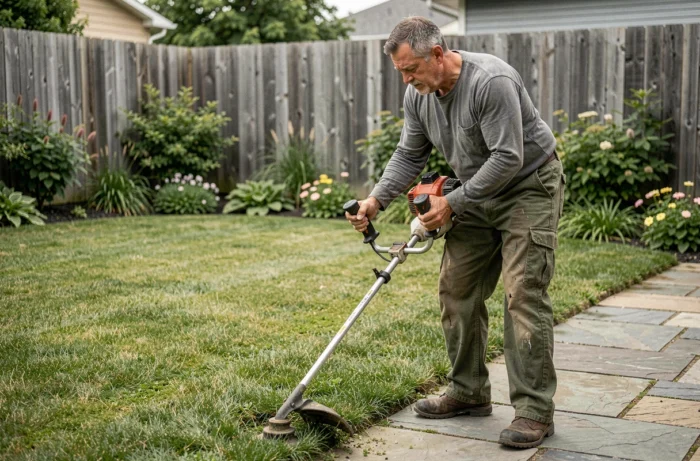
A petrol grass trimmer remains a popular garden tool for finishing the job where a lawn mower cannot reach. Powered by a petrol engine, it differs from electric and battery-powered models in that it can operate without a cable or limits on runtime.
The market offers a wide range of engine displacements, cutting widths and head systems, making the choice less straightforward than it might seem for homeowners maintaining a medium-sized or large plot.
Noise regulations and petrol grass trimmers: what your local authority requires
Before comparing technical specifications, there is one often-overlooked factor worth checking: permitted operating hours. There is no single nationwide time window for noisy gardening work. Municipal or prefectural orders set the permitted hours, which vary from one local authority to another.
A petrol grass trimmer is significantly louder than an electric or battery-powered model. Regulations require CE marking and the guaranteed sound power level to be stated on the appliance, but this information alone is not enough to prevent disputes with neighbours. Noise nuisance is also assessed based on its duration, frequency and intensity.
In practice, if you plan to use the tool several times a week during the season, check your local authority’s rules before buying. Using a powerful model outside permitted hours can result in penalties, regardless of its stated noise level. The comparison guides available on coupebordurethermique.fr let you compare noise levels across models—a factor to weigh against these local restrictions.
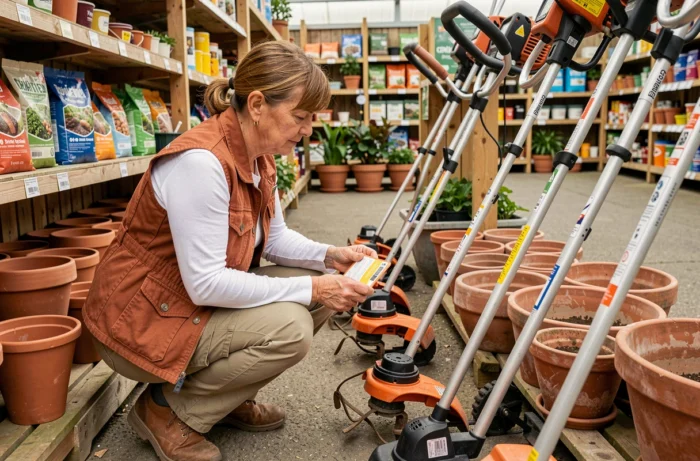
Petrol grass trimmer power and engine displacement: what really matters
Competitors often structure their guides around power in watts. For a petrol model, this figure is less meaningful on its own: engine displacement (measured in cm³) determines its actual cutting capacity in dense vegetation.
Short grass or tall grass and brambles
For a standard lawn edge along a path or around flower beds, a modest engine displacement is more than sufficient. The engine runs at low speed, fuel consumption stays manageable, and the line wears less quickly.
However, when the terrain includes tall grass, scrub or semi-woody vegetation, a larger engine displacement is needed. The engine must maintain a steady speed under load so the line or blade can cut without stalling. An engine with insufficient displacement for dense vegetation will wear out prematurely.
Brush-clearing requirements and choosing the right tool
In some areas at risk of wildfires, clearing vegetation around homes is mandatory. This goes beyond routine cosmetic upkeep and requires regular work on vegetation that can be tough to cut. An entry-level petrol grass trimmer may not be up to the task: it may be worth choosing a model with a larger engine displacement, or even a brush cutter, depending on the density of the vegetation to be cleared.
Cutting width and head system: matching the tool to the terrain
Cutting width, measured in centimetres, determines how wide a strip of vegetation is cut with each pass. Petrol grass trimmers can have a significantly wider cutting width than electric models, reducing the number of passes needed over large areas.
A narrow plot with closely spaced flower beds, low walls or tree bases calls for a moderate cutting width to maintain manoeuvrability. By contrast, an open bank or the edge of a plot benefits from a wider cut.
Nylon line, plastic blades or metal blade
The choice of cutting head affects the result just as much as the engine:
- Nylon line (round, square or serrated) remains the standard for lawn edging and soft grass. Its diameter must match the engine’s power: line that is too thick for a lightweight engine causes jerking and rapid clutch wear.
- Plastic blades replace the line on some models and are more resistant to contact with hard edges (low walls, paving slabs). They wear down gradually and can be replaced without tools on most rotary heads.
- The metal blade, intended for brush cutters or high-end petrol grass trimmers, cuts through brambles, woody shoots and semi-shrubby vegetation. Using one requires a harness and suitable protective equipment.
The line diameter must match the engine displacement to avoid putting excessive strain on the mechanism. Check the manufacturer’s compatibility guidance before switching to a different line thickness.
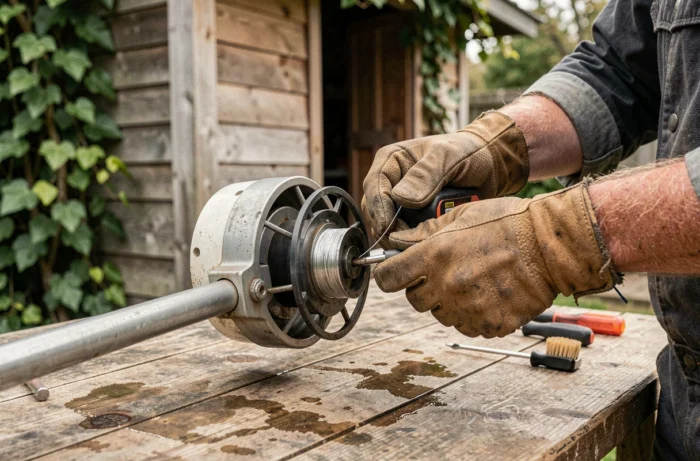
Weight, harness and comfort during extended use
A petrol grass trimmer weighs noticeably more than a battery-powered or electric model because of its petrol engine and fuel tank. For a few minutes of edging, the difference is negligible. During an hour or more of maintenance, however, it can contribute to muscle fatigue in the arms, shoulders and back.
A carrying harness distributes the weight across your torso and hips, easing the strain on your arms and improving cutting precision. A simple shoulder strap is sufficient for occasional use. For regular maintenance over a large area, a double-shoulder harness with a suspension hook provides better balance.
Two other features affect comfort during use:
- The handle (D-shaped, loop or bicycle-style) affects your posture and sweeping range. A bicycle-style handle suits large, flat areas, while a D-shaped handle makes it easier to work along edges and around obstacles.
- An anti-vibration system limits the vibrations transmitted from the engine to your hands and forearms. On a model without this system, numbness can set in after around twenty minutes of continuous use.
- Access to the fuel cap and air filter affects how easy routine maintenance is. A filter that can be reached without tools is more likely to be cleaned regularly, which extends the life of the petrol engine.
Choosing a petrol grass trimmer comes down to matching the engine displacement and cutting head to the terrain you need to maintain, while also considering less obvious factors such as local noise regulations and comfort during extended use. Comparing specifications without taking these factors into account often leads to a poorly suited purchase: too powerful for a small garden or underpowered for mandatory brush clearing.