Yoga improves flexibility, reduces stress, and enhances concentration. These benefits of yoga for the balance of body and mind are documented and repeated everywhere. But what measurable effects truly distinguish this practice from other gentle physical activities? And on which specific parameters does it act beyond the simple feeling of well-being?
Proprioception and Fall Prevention: What Balance Poses Change Concretely
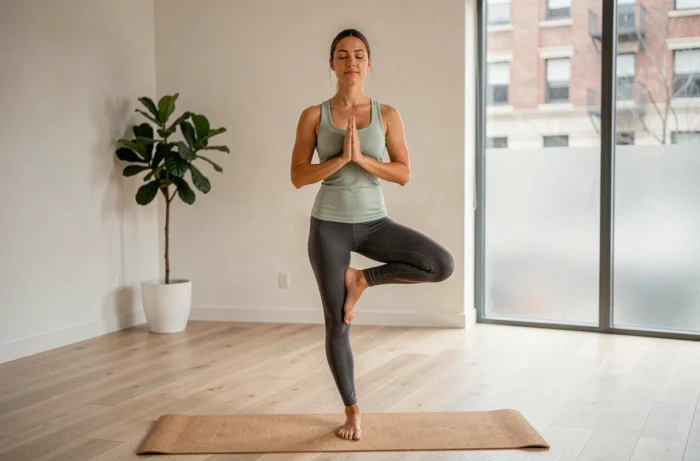
Balance poses (tree, warrior III, half-moon) engage proprioception, which is the body’s ability to perceive its position in space. This proprioceptive work differs from that of a simple muscle strengthening exercise: it simultaneously engages joint sensors, deep stabilizing muscles, and the vestibular system.
In people over 50, improvement in static and dynamic balance reduces the risk of falling. Recent literature clearly distinguishes this effect from mere improvement in flexibility. While a passive stretch lengthens muscle fibers, a held balance pose forces the brain to constantly recalibrate sensory signals to maintain stability.
This benefit is particularly pronounced when the practice includes slow transitions between poses, with eyes open and then closed. The progressive difficulty forces the nervous system to adapt, which strengthens postural reflexes in the long term. Two to three weekly sessions are enough to observe measurable progress in single-leg stability.
Organizations like Les Jardins Du Yoga offer classes that precisely integrate this type of progression, adapting the poses to the level of each practitioner.
Yoga and Sports Recovery: Comparative Effects on Mobility and the Nervous System
Yoga is increasingly used as a complement to intensive sports training, particularly by runners and practitioners of impact sports. The focus is not on direct performance, but on recovery and prevention of joint injuries.
| Parameter | Classic Stretching Post-Exercise | Yoga Session (gentle hatha/vinyasa) |
|---|---|---|
| Joint Mobility | Targets isolated muscle groups | Works in complete muscle chains |
| Activation of the Parasympathetic Nervous System | Low (mechanical stretching) | High (controlled breathing + held poses) |
| Reduction of Post-Exercise Cortisol | Not significantly documented | Documented decrease via pranayama |
| Effect on Recovery Sleep | Limited | Improvement reported by regular practitioners |
| Long-Term Injury Prevention | Localized | Global (balance, proprioception, mobility) |
The fundamental difference lies in the activation of the parasympathetic nervous system. Classic stretching acts mechanically on the muscle. A yoga session combining slow breathing (pranayama) and held poses triggers a broader physiological response: decrease in cortisol, slowing of heart rate, release of fascial tension.
For a runner accumulating miles, this dual action (mechanical and nervous) explains why a post-training yoga session often produces a recovery effect superior to a simple stretching protocol.
Breathing and Stress Regulation: The Mechanism of Pranayama
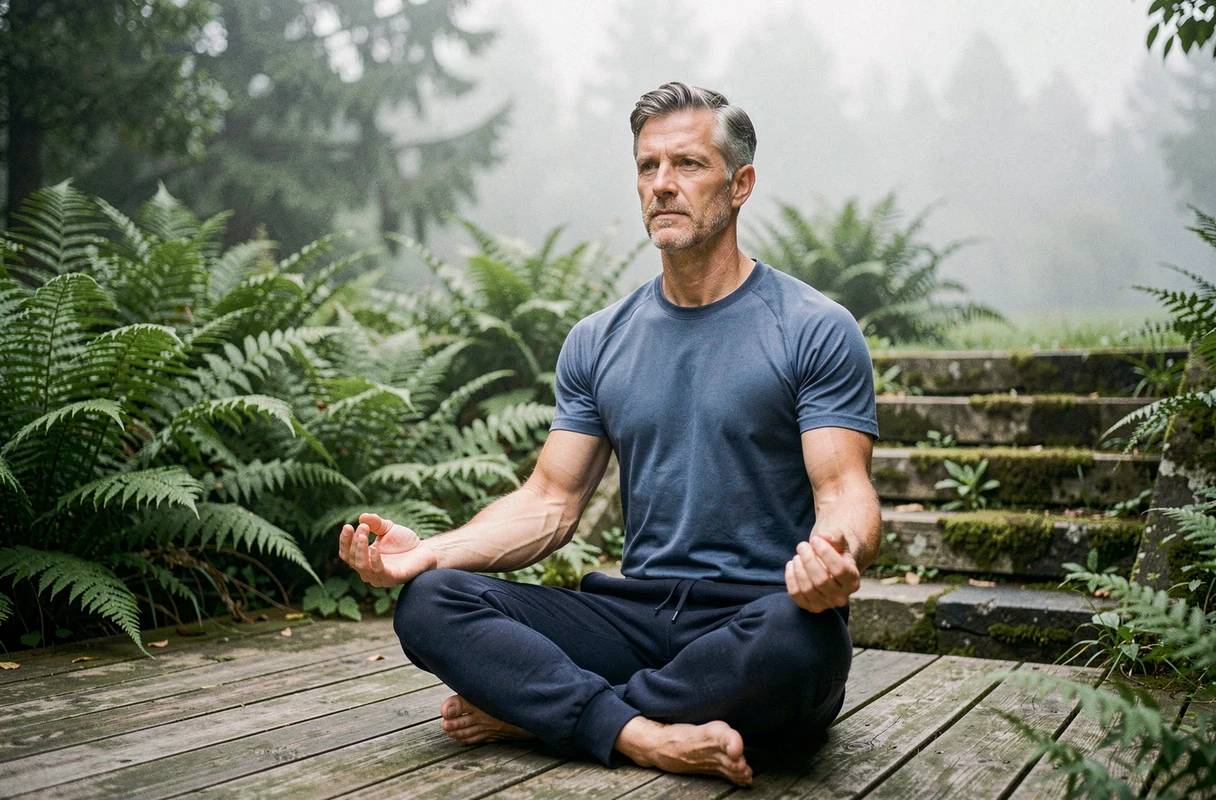
Controlled breathing is the most underestimated lever of yoga. Pranayama (structured breathing exercises) acts directly on the vagus nerve, the main activator of the parasympathetic system.
- Slow abdominal breathing (four to six cycles per minute) causes a measurable shift in the autonomic nervous system, moving from sympathetic mode (alert, tension) to parasympathetic mode (rest, digestion, repair).
- The heart coherence induced by these exercises reduces the variability of perceived stress for several hours after the session, not just during practice.
- Prolonged exhalation (inhalation/exhalation ratio of 1 to 2) specifically activates aortic baroreceptors, which helps lower resting blood pressure.
This mechanism distinguishes yoga from other gentle physical practices like Pilates or tai chi. Meditation alone acts on the mind. Physical exercise alone acts on the body. Pranayama creates a neurophysiological bridge between the two, which explains the combined effect on stress, concentration, and sleep quality.
Social Connection and Collective Practice: A Rarely Measured Benefit
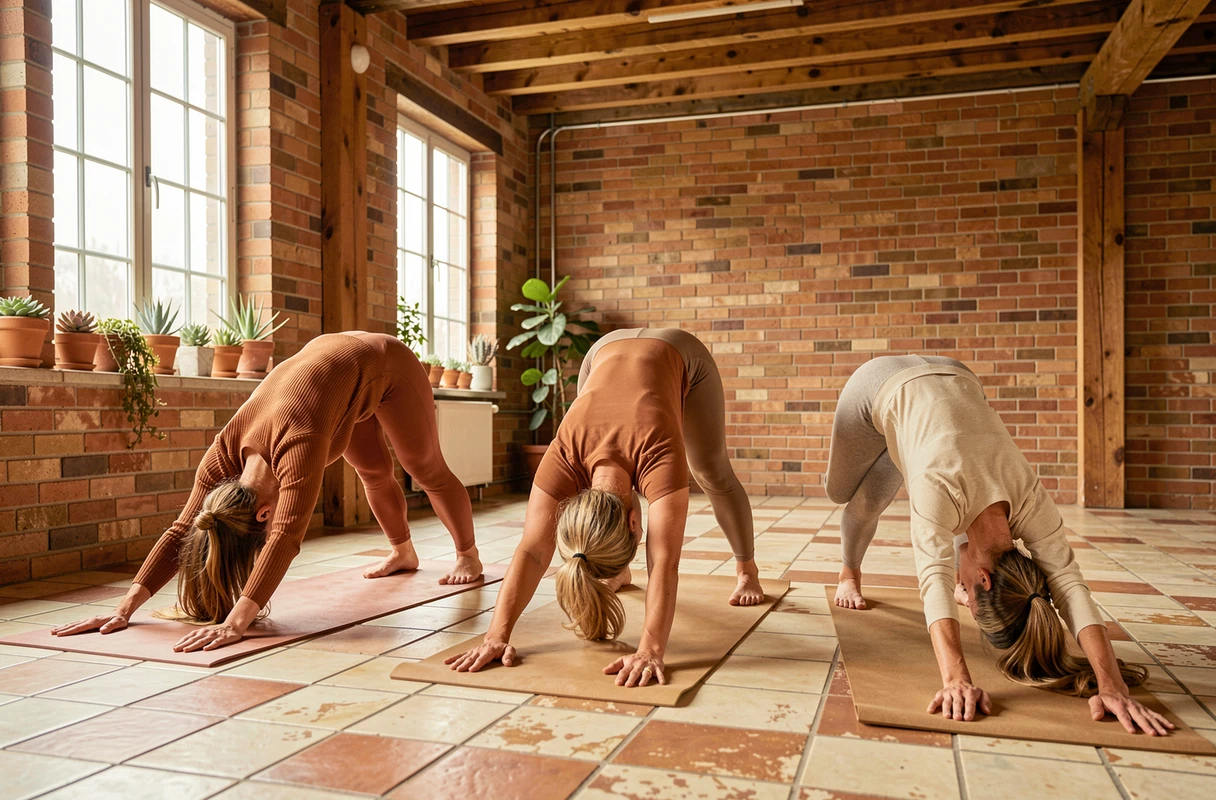
One aspect that is rarely addressed in articles about the benefits of yoga concerns the social dimension of practicing in a group. For those over 50, the regularity of a weekly class structures the week, creates an appointment, and fosters social interactions outside the family or professional setting.
This benefit is not anecdotal. Social isolation is a documented risk factor for cognitive decline and depression in seniors. Participating in a yoga class combines three protective elements: physical activity, cognitive stimulation (memorizing sequences, focusing on breathing), and regular human contact.
Group Yoga or Solo Practice: What Differences in Motivation
Practicing at home (videos, apps) offers appreciated flexibility. However, available data shows that long-term regularity is significantly better among practitioners who attend in-person classes. The group dynamic, correction by an instructor, and simply moving to the class create a commitment that solo practice struggles to replicate after a few weeks.
Yoga simultaneously affects proprioception, the autonomic nervous system, joint mobility, and social connection. This action on multiple systems at once remains its most tangible specificity compared to other gentle physical activities. To derive real benefit, regularity matters more than intensity: two to three sessions per week, even short ones, produce cumulative effects on balance, stress management, and recovery quality.