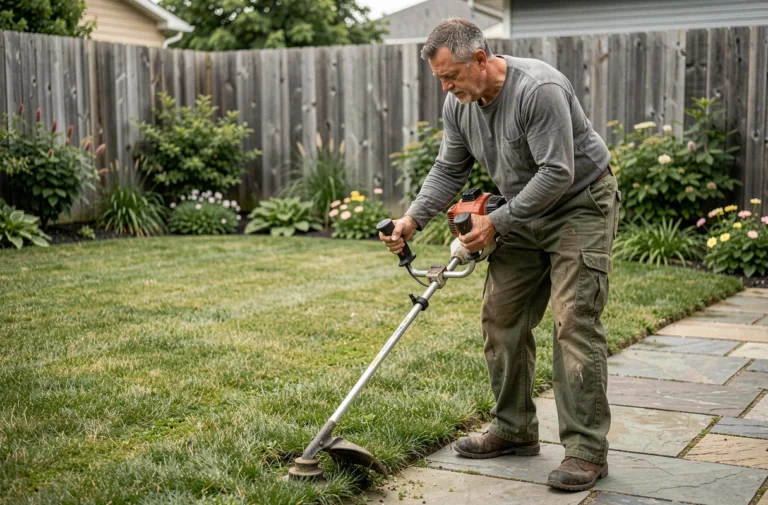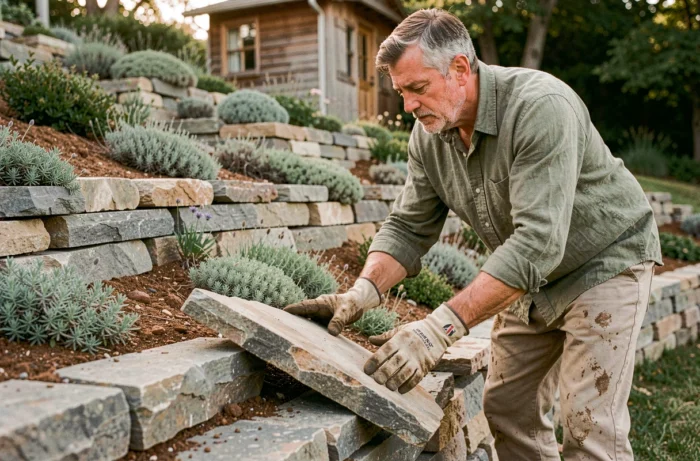
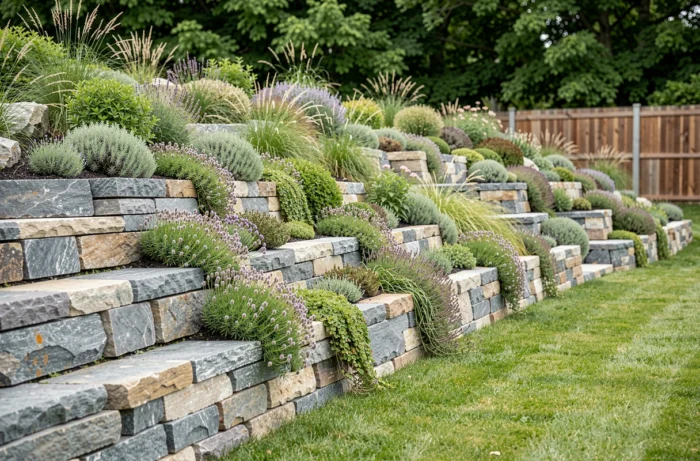
A stone slope is an earthwork built on an incline and supported and faced with natural stone or rock blocks. Its primary purpose is to retain soil on sloping ground, but it also shapes the garden by creating usable levels. A successful design depends less on the aesthetic choice of stone than on managing water and ensuring the stability of the ground beneath it.
Drainage and hydrostatic pressure: the technical challenge of a stone slope
Before laying a single stone, drainage must be considered to ensure the structure lasts. A poorly drained stone slope is subject to hydrostatic pressure, which builds up behind the blocks when rainwater seeps in but cannot drain away. This pressure can deform the structure, cause slippage or dislodge stones over time.
The drainage system should be planned from the outset. A layer of gravel behind the stones, combined with a perforated drain pipe at the bottom, channels water to an outlet. Drainage outlets must never be blocked or discharge water directly at the foot of the slope, as this can cause erosion further downhill.
This guide to creating a stone slope in your garden explains the basic principles to follow for long-lasting water drainage.
Clay soil makes the problem worse: clay retains water and swells, increasing pressure on the structure. In this case, the drainage layer behind the stones should be thicker, and a permeable geotextile can be used to separate the gravel from the clay soil and prevent clogging.
Choosing stones and laying them for a stable slope
The type of stone determines both the structure’s stability and its final appearance. Locally sourced stone (limestone, sandstone or granite, depending on the region) offers two advantages: it blends into the landscape and costs less to transport.
Dry stone or mortared stone
Dry-stone construction (without mortar or cement) offers structural flexibility. The structure can absorb minor ground movements without cracking. The gaps between the stones also provide a natural outlet for water, complementing the drainage system.
A mortared stone slope, on the other hand, forms a rigid structure. It can support heavier loads at the top of the slope (vehicle access, a patio), but requires a properly sized drainage system because water cannot escape through the joints.
How to lay the blocks
- Place the largest stones at the base of the slope, with their flat faces pointing outward, to create a wide, stable foundation
- Angle each course slightly backward (toward the ground) so the weight of the soil presses the stones into place rather than pushing them forward
- Stagger the joints from one course to the next, as with a brick wall, to distribute forces and prevent vertical lines of weakness
- Fill gaps with smaller stones (known as packing stones) to secure the main blocks without using soil, which would settle
A slope with stones that are too small at the base will eventually deform, even with good drainage. The foundation bears the entire load, so it must be wider than the visible wall.
Slope height, soil type and the limits of DIY
The height of the structure alone is not enough to determine whether it can be built without professional advice. Soil type, the gradient of the land, the presence of a nearby water table and, above all, loads at the top of the slope (parking, construction, fill) radically change the mechanical stresses involved.
A low slope on unstable sandy soil can cause more problems than a taller structure on compact, rocky ground. When a slope retains soil that supports a particular use (traffic, storage), the stability of the entire site must be assessed, not just that of the visible structure.
Planning requirements to check
A retaining wall is not subject to the same rules as a simple boundary wall. Planning requirements vary depending on the nature and location of the project. In a protected area (the grounds of a historic monument or a designated site), requirements may be more stringent, even for a modest structure. Contacting the local council’s planning department before starting can help avoid unpleasant surprises.
Planting a stone slope: stabilizing it and blending it into the garden
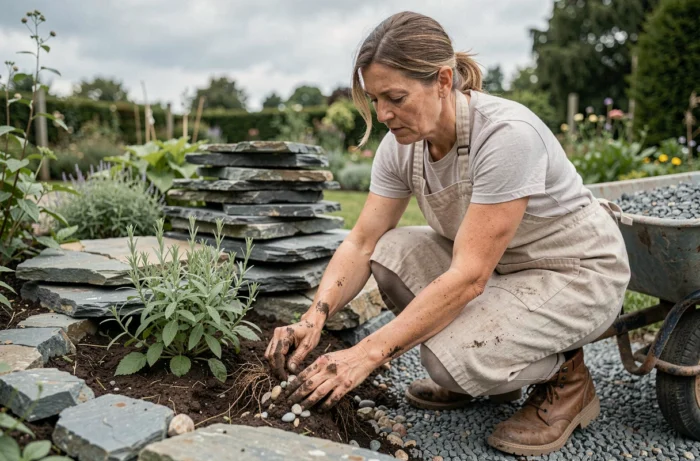
Once the stones are in place, planting serves two purposes: roots strengthen the soil behind the structure, while plants soften the slope’s stony appearance and help it blend into the garden landscape.
Plants suited to slopes share several characteristics: a dense, spreading root system, tolerance to drought (water runs off more quickly on a slope) and enough ground cover to limit surface erosion.
- Sedums and houseleeks grow in the gaps between stones and thrive in very shallow soil
- Ivy and periwinkle quickly cover surfaces and stabilize the topsoil
- Ornamental grasses (fescues, stipas) root deeply and withstand wind on exposed slopes
- Ground-cover shrubs such as creeping cotoneaster secure deeper layers of soil with their vigorous root systems
On a dry-stone slope, unfilled gaps also provide shelter for beneficial wildlife, including lizards, pollinating insects and small invertebrates. Dry-stone walls are a recognized habitat for biodiversity, provided every crack is not systematically filled with mortar or soil.
Planting as soon as construction is complete, preferably in autumn, gives plants time to establish their roots before the first hot weather. Regular watering during the first summer is still necessary, even for drought-tolerant species, until their roots reach the moist layers of soil.
A stone slope that is well drained, properly founded and planted in the months after construction requires little maintenance thereafter. The only long-term concern is checking the drainage outlets, which can become clogged with fallen leaves or soil deposits.